
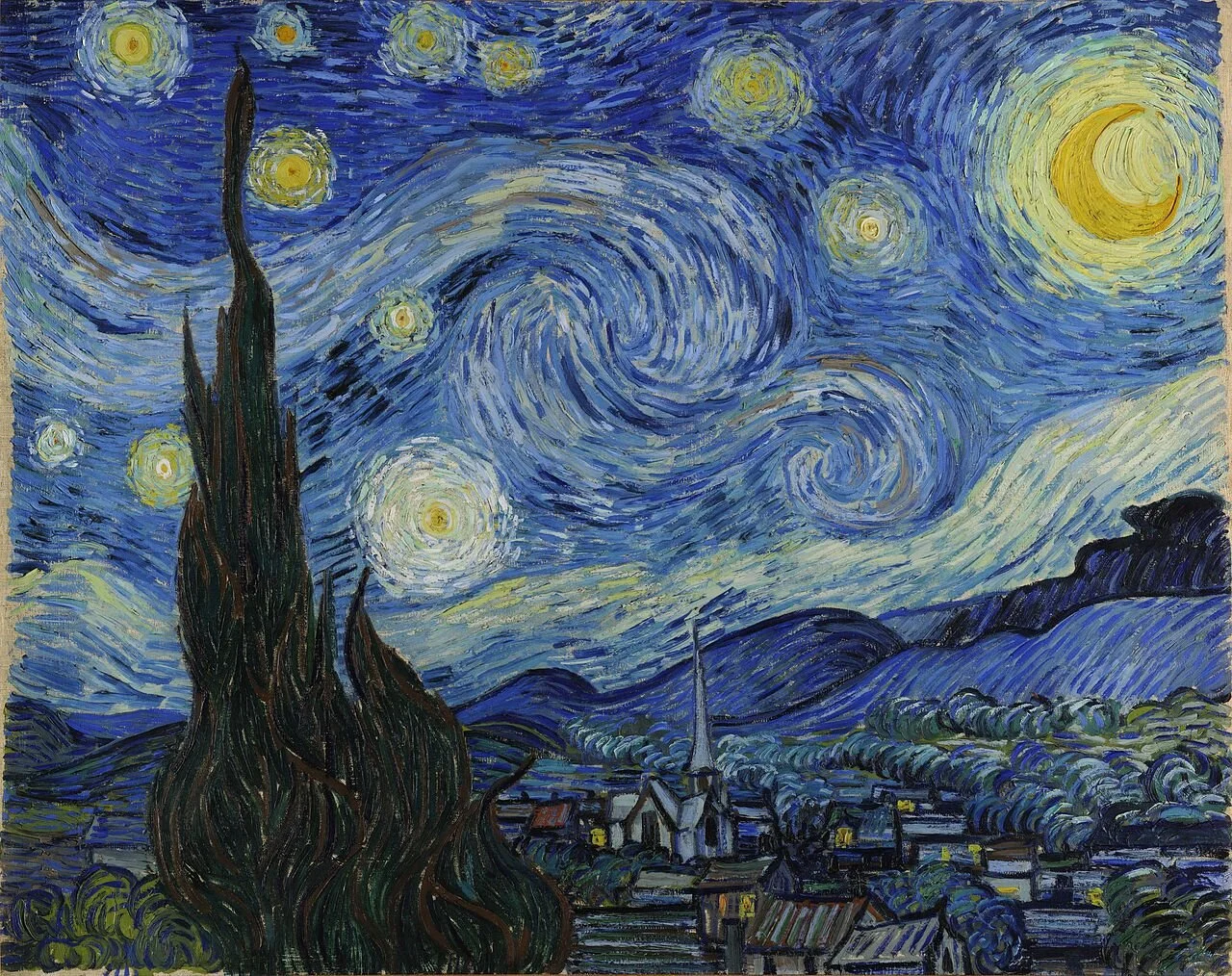
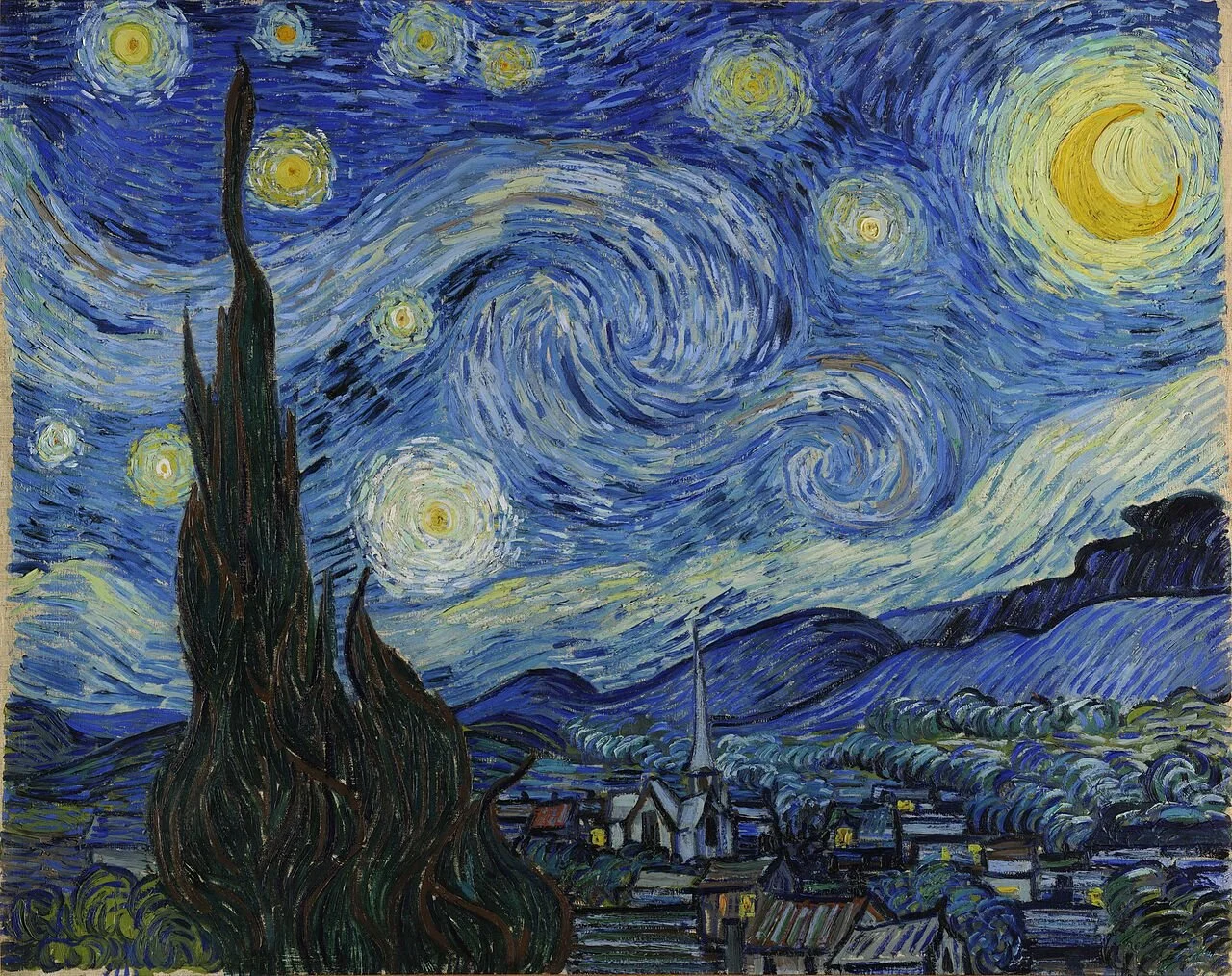
Starry Night
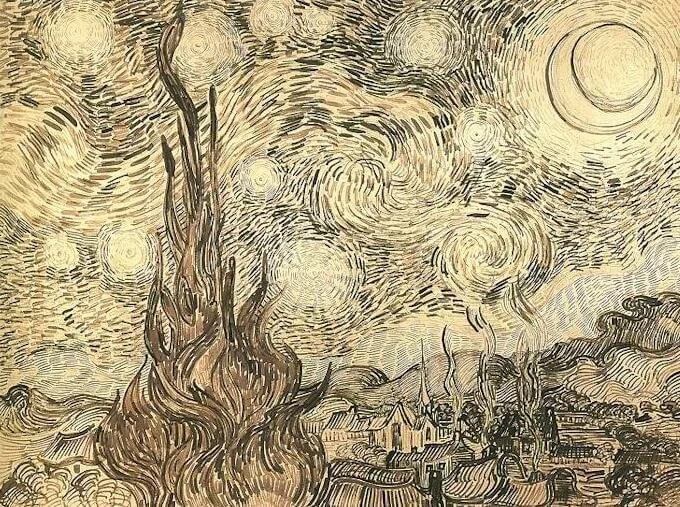
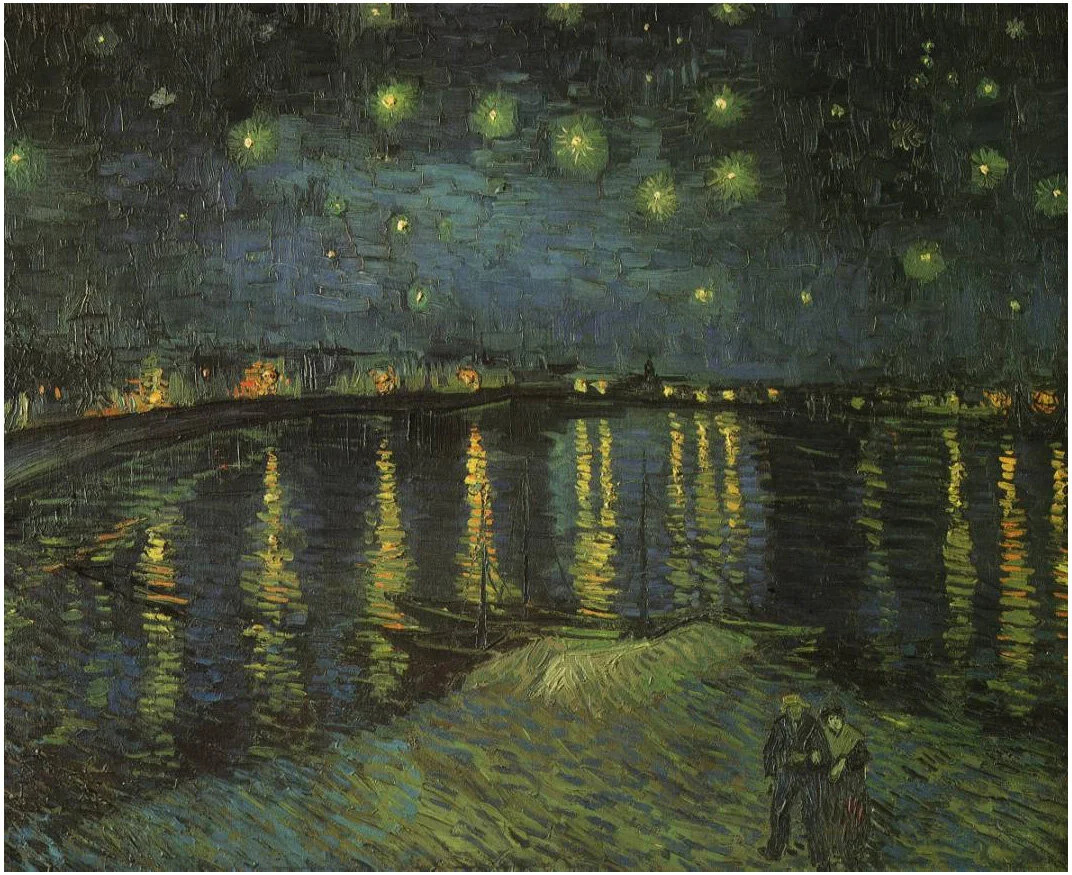
Numerous theories and assumptions abound as to what inspired one of Vincent Van Gogh’s most famous and stunning works, Starry Night. While it is no secret that he was deeply religious and constantly drew from his difficult upbringing, early pastoral life and the consequent struggles he had with the clergy and his own personal faith, I thought it might be best to see this through the artist’s eyes, in his own words, instead of adding yet another theory to the list.


This painting has inspired many works of art over the years including Don McLean’s soulful tribute to the artist, titled “Vincent”.
Below are excerpts taken from letters he wrote to his nearest and dearest which clearly highlight the special affinity he had for stars.


To Anna van Gogh-Carbentus / Isleworth
Friday, 13 October, 1876
And, transported on the wings of Love to Him who is, we wandered in spirit to those heavenly spheres, whence the stars, the moon and the sun send us their light.
To Theo van Gogh / Isleworth
Wednesday, 25 October 1876
Thus saith the Lord, which giveth the sun for a light by day, and the ordinances of the moon and of the stars for a light by night, which divideth the sea when the waves thereof roar; The Lord of hosts is His name.’
To Theo van Gogh / Dordrecht
Thursday, 8 February, 1877
Still welcoming us, that blessed night,
In which the stars with beauteous light
And heavenly hosts with one glad voice
In Jesus’ coming do rejoice.
O Lord, we love the light of Thy sun and the soughing of Thy sea; we lift up our eyes to Heaven and love the stars that Thou bringest out their host by number and that Thou callest all by name.
When we admire Thy works, however, ah! then we feel it, even when we thank Thee for the beauty of Thy creation, that we cannot find sufficient comfort for our life; the light of the sun and the glittering of the stars, Lord, that is not it, that cannot fulfil us, we need a different and better light – the light of the spirit and the mind that was in Jesus Christ – Love of Thee, of Christ and of one another in Him – the light of a Love that can constrain and can ignite the fire of fervour in our heart.
To Theo van Gogh / Etten
Sunday, 8 April, 1877
The sky was grey but the evening star shone through the clouds, and now and then other stars were visible too. It was still very early when I arrived at the cemetery in Zundert, where it was so quiet, I went to have a look at all the old places and paths and waited for the sun to rise. You know the story of the Resurrection, everything there reminded me of it in that quiet cemetery this morning.
To Theo van Gogh / Amsterdam
Thursday, 31 May, 1877
The ways of the fishermen who live on the coast share the nature of the Ocean. They have none of the habits of the city. The essence of their character is independence. These men have no love of the land; they need space, the free vastness of the seas, the untamed flood, the sky, blue by day, full of stars by night, the sharp north wind, the mind of a man standing upright upon the Ocean.
To Theo van Gogh / Amsterdam
Tuesday, 5 June, 1877
In the evening there’s also a beautiful view of the yard, where everything is deathly still and the street-lamps are burning and the sky above full of stars. When all sounds cease – God’s voice is heard – under the stars.
To Theo van Gogh / Amsterdam
Tuesday, 18 September, 1877
And everything was so deathly still, ‘the withered leaf does not rustle, the stars alone speak. When all sounds cease, God’s voice is heard under the stars’ - Eccl. 11:7-12:7.
Remember now thy Creator in the days of thy youth, while the evil days come not, nor the years draw nigh, nor the stars be darkened, nor the clouds return after the rain.
To Theo van Gogh / Amsterdam
Monday, 19 November, 1877
Darkness spread slowly over the horizon, and a few stars appeared in the sky like golden eyes.
To Theo van Gogh / Les Saintes-Maries-de-la-Mer
Monday, 4 June, 1888
Against the blue background stars twinkled, bright, greenish, white, light pink — brighter, more glittering, more like precious stones than at home — even in Paris.
To Theo van Gogh / Arles
Tuesday, 10 July, 1888
In the life of the painter, death may perhaps not be the most difficult thing.
For myself, I declare I don’t know anything about it. But the sight of the stars always makes me dream in as simple a way as the black spots on the map, representing towns and villages, make me dream.
Why, I say to myself, should the spots of light in the firmament be less accessible to us than the black spots on the map of France.
To Theo van Gogh / Arles
Sunday, 15 July, 1888
I’ve just read Victor Hugo’s L’année terrible. There’s hope there, but …. that hope’s in the stars. I find that true, and well said, and beautiful; and what’s more, I readily believe it myself, too.
But let’s not forget that the earth’s a planet too, therefore a star or celestial globe. And what if all these other stars were the same! It wouldn’t be very jolly, in fact you’d have to start all over again.
To Theo van Gogh / Arles
Saturday, 18 August, 1888
And still to feel the stars and the infinite, clearly, up there. Then life is almost magical, after all.
To Willemien van Gogh / Arles
Friday, 14 September, 1888
I’ve painted him as something of a poet, his refined and nervous head standing out against a deep ultramarine background of the night sky, with the twinkling of the stars.
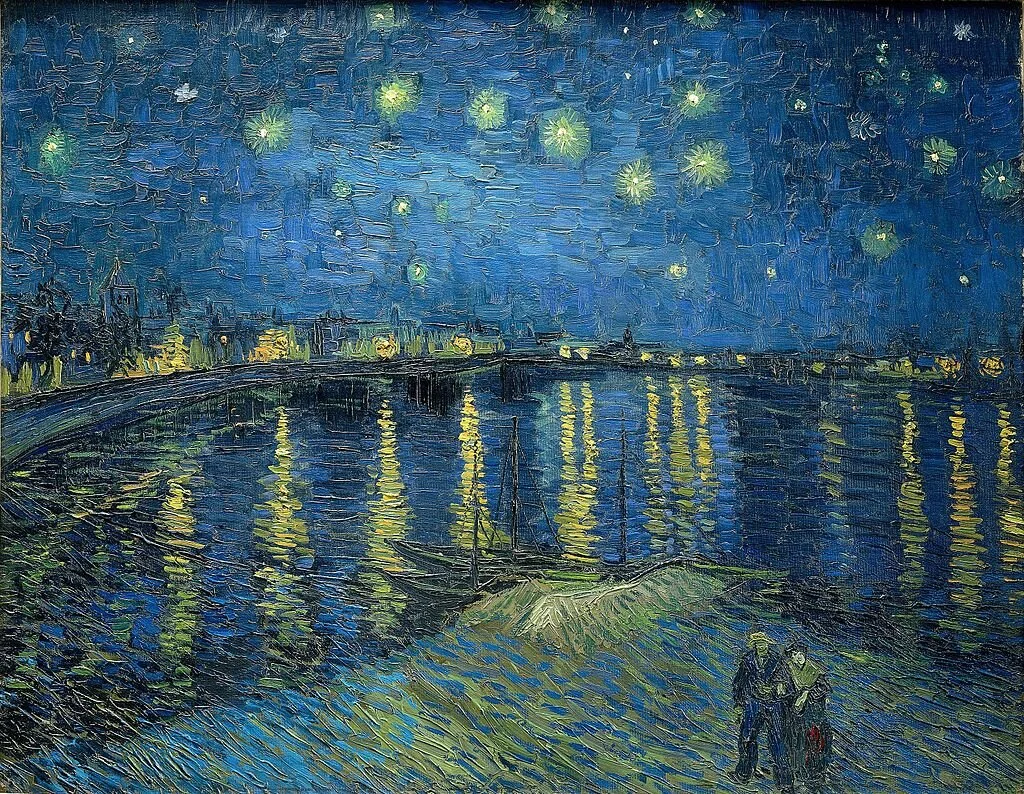
I definitely want to paint a starry sky now. It often seems to me that the night is even more richly coloured than the day, coloured in the most intense violets, blues and greens.
If you look carefully you’ll see that some stars are lemony, others have a pink, green, forget-me-not blue glow. And without labouring the point, it’s clear that to paint a starry sky it’s not nearly enough to put white spots on blue-black.
I was interrupted precisely by the work that a new painting of the outside of a café in the evening has been giving me these past few days. On the terrace, there are little figures of people drinking. A huge yellow lantern lights the terrace, the façade, the pavement, and even projects light over the cobblestones of the street, which takes on a violet-pink tinge. The gables of the houses on a street that leads away under the blue sky studded with stars are dark blue or violet, with a green tree. Now there’s a painting of night without black. With nothing but beautiful blue, violet and green, and in these surroundings the lighted square is coloured pale sulphur, lemon green. I enormously enjoy painting on the spot at night. In the past they used to draw, and paint the picture from the drawing in the daytime. But I find that it suits me to paint the thing straightaway. It’s quite true that I may take a blue for a green in the dark, a blue lilac for a pink lilac, since you can’t make out the nature of the tone clearly. But it’s the only way of getting away from the conventional black night with a poor, pallid and whitish light, while in fact a mere candle by itself gives us the richest yellows and oranges.
To Theo van Gogh / Arles
Saturday, 29 September, 1888
That doesn’t stop me having a tremendous need for, shall I say the word — for religion — so I go outside at night to paint the stars, and I always dream a painting like that.
To Emile Bernard / Saint-Rémy-de-Provence
Tuesday, 26 November, 1889
However, once again I’m allowing myself to do stars too big. New setback, and I’ve enough of that.